When gunfire erupts on the edges of a marquee public gathering, the headlines fixate on the event; the facts, however, point to place and timing, not causation. In Birmingham, the mass shooting occurred near Legion Field after the Magic City Classic — one person was killed and eight were wounded — and the clearest picture we have is built from what police did, found, and asked the public to provide.
The Short Version
- Nine people were shot near Legion Field after the Magic City Classic; one died and eight were injured, including one in critical condition.
- Police responded around 7:50 p.m. to Graymont Avenue West, secured multiple firearms, and detained one person for questioning.
- Authorities suspended tailgating, urged people to avoid the area, and requested witness videos to aid the investigation.
- Officials emphasized the shooting happened near the stadium in a vendor/tailgate area after the game, with motive not yet established.
What Happened: Established facts from the police response
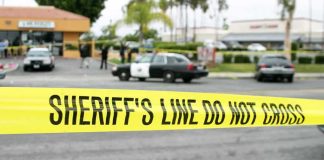
Shortly after 7:50 p.m., Birmingham police officers were dispatched to the 400 block of Graymont Avenue West, just outside Legion Field, in the aftermath of the Magic City Classic game. They encountered multiple gunshot victims and launched a coordinated response with fire and EMS. By the department’s public updates, nine people had been shot: one person died, one was in critical condition, and seven others were treated for non-life-threatening wounds. That casualty picture — the most consequential frame of this incident — is consistent across contemporaneous reporting grounded in police statements and on-scene briefings.
Police leadership also described immediate investigative steps. Officers recovered multiple firearms at or near the scene and placed them in the department’s property system for evidentiary handling. Separately, officials confirmed that one individual had been detained and transported to police headquarters for questioning — crucially, detention for questioning, not arrest on charges. These are foundational facts, not speculations: recovered weapons, a named location, a defined timeline, and a discrete operational response.
Where it occurred and why that distinction matters
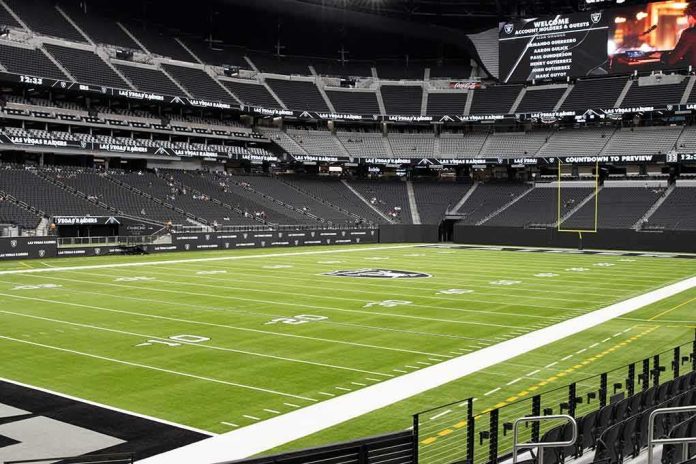
Large events create their own geography: official venues; sanctioned vendor corridors; informal spillover into adjacent streets where spectators linger, eat, and socialize. Authorities emphasized that the shooting did not happen inside Legion Field; the locus was Graymont Avenue West, in or near an area with ongoing vendor and tailgating activity after the game concluded. That distinction is not about euphemism; it is about investigative clarity and public understanding of risk. “Shooting after the Classic near Legion Field” describes the timeline and setting accurately, while avoiding the false inference that the stadium precinct itself was breached during play.
In practical terms, that geography shaped the police response. Commanders suspended all tailgating, asked the public to avoid the area to allow emergency services to work unimpeded, and broadcast a targeted request for citizen video — particularly from vendors and attendees whose phones could hold pivotal fragments of the timeline. Those directives match best practices for rapidly stabilizing a fluid, crowded scene while preserving evidentiary value and clearing lanes for medical transport.
What authorities confirmed — and what they did not
Three confirmed elements anchor the current public record: the casualty count and medical status; the scene location and time; and the seizure of multiple firearms. Each came from named police spokespeople, echoed in multiple outlets. One person was detained for questioning; that is not the same thing as identifying a suspect, announcing an arrest, or attributing a motive. Officials also refrained from asserting that every recovered firearm was used in the offense — a point that awaits ballistic comparison and case linkage in any modern gun investigation.
This measured posture is appropriate. Early certainty is a poor substitute for evidence in complex, crowd-adjacent shootings, where multiple shooters, overlapping disputes, or opportunistic gunfire can produce confusing soundscapes and conflicting witness accounts. Police characterized the violence as senseless and requested public help. Those choices reflect an investigation still testing leads, canvassing cameras, and tracing weapons, not one at a stage to publish narrative conclusions.
How investigations like this proceed
After securing the scene, detectives will undertake parallel workstreams. Forensics teams document casing fields, projectile strikes, and blood pools to define firing positions and lines of fire; latent prints and touch DNA may be viable on certain surfaces, though guns themselves often yield mixed or low-probative profiles. Every recovered firearm undergoes eTrace for origin and ownership history, test-firing for National Integrated Ballistic Information Network (NIBIN) comparisons, and serial-number checks for theft or prior case associations. Shell casings and bullets, when recovered, are compared to test fires to tie specific guns to specific shots where feasible.
Video is the other spine of a multi-victim shooting inquiry. Fixed cameras — stadium perimeters, traffic poles, vendor setups — are married to mobile footage from bystanders. Investigators build minute-by-minute mosaics to sequence arguments or movements leading up to muzzle flashes, then track post-incident flight paths. When credible, this visual chronology is cross-checked against acoustic patterns from ShotSpotter-like arrays (if deployed), 911 call timestamps, and digital forensics on seized phones. The request that witnesses submit video is not performative; it is the raw material of modern gun-case reconstruction.
Context: big events, nearby streets, and repeated proximity
High-visibility gatherings create density, and density amplifies both harm and attention when violence occurs close by. Birmingham’s Magic City Classic is among the most prominent HBCU rivalry weekends, drawing large crowds into a defined footprint and adjacent corridors. While this incident’s cause had not been publicly established, the pattern — violence proximate to but not inside the primary venue — is not anomalous. Local coverage has cataloged previous shootings in the broader area around the Classic weekend, reinforcing that “nearby and after” is an unfortunate but recognizable risk contour rather than a singular breach of stadium security.
That distinction has two implications. First, it guides prevention: crowd-management plans must extend beyond turnstiles to vendor lanes and egress routes, with lighting, camera coverage, and visible patrol presence aligned to the way people actually use the space after the final whistle. Second, it guides communication: officials do the public a service when they speak precisely about where harm occurred, preserving trust without minimizing the seriousness of the violence. In Birmingham, the city’s steps — clearing tailgating, coordinating multi-agency support, and seeking evidence — fit that model.
One person was killed, and eight others were wounded in a mass shooting just outside Legion Field after the Magic City Classic on Saturday night, Birmingham police said.
READ MORE: https://t.co/qxG0cQaQ7p
— The National Desk (@TND) November 2, 2026
What it means going forward
For residents and event planners, three takeaways endure. One, risk follows crowds into the periphery; security operations must too. Two, in the first 24–72 hours, the most reliable signals are operational: where police concentrated resources, what they seized, and what they asked the public to do. Here, those signals were unambiguous — a serious, multi-victim shooting near, not in, the stadium; multiple weapons recovered; one person detained; a sweeping evidence-gathering push. Three, patience is not passivity. Community-provided video has repeatedly made the difference in multi-shooter cases; supplying it quickly is the surest civic contribution to accountability.
Sources:
townhall.com, nytimes.com, whmi.com, cnn.com, upi.com, fox10tv.com, wlbt.com