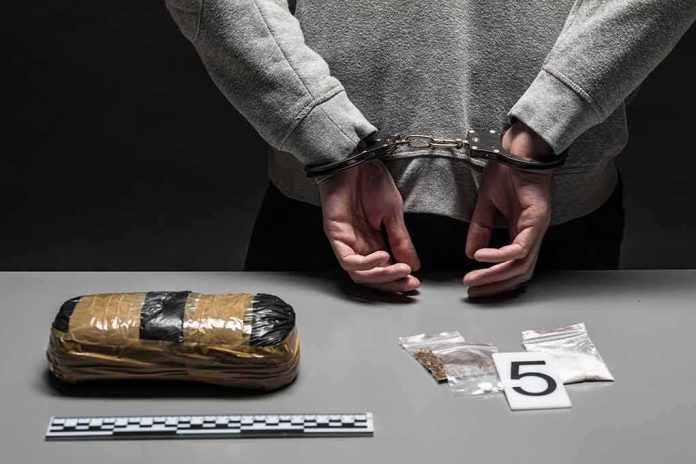
A two-time Jeopardy! champion now faces ten felony counts tied to alleged child sexual exploitation in North Carolina.
Story Snapshot
- Arrest warrant alleges ten counts of second-degree sexual exploitation of a minor.
- The alleged offense date is November 19, 2025, per court-record reporting.
- Wake County officials arrested and booked the defendant on October 23, 2026.
- The case surfaced months after a guilty plea to felony secret peeping and a probation sentence.
What The Warrant And Court Records Say
Wake County court-record reporting states that Philip “Joey” DeSena, 44, was arrested on October 23, 2026, and charged with ten counts of second-degree sexual exploitation of a minor. An arrest warrant described by multiple outlets alleges he possessed or duplicated images and videos showing children in sexual acts. Reporters who reviewed the warrant cite an estimated victim age range of seven to fifteen. The documents list November 19, 2025, as the offense date, giving the allegations a precise timeline rather than a vague claim.
Coverage attributes the ten counts to a single warrant packet connected to Wake County. Reports say DeSena was booked into the county jail and later appeared before a judge. One outlet reported that he was denied bond at an initial hearing. These are standard early steps in a felony case that involve intake, processing, and a first appearance before a judge to set conditions of release or detention while the case proceeds.
How Probation Raises The Stakes
People magazine reporting says DeSena pleaded guilty this summer to two felony counts of secret peeping and received a 60-month probationary sentence. Fox-affiliated reporting describes a judge noting that the new alleged conduct happened during that probation term. If true, that creates two legal tracks at once: new felony charges and a potential probation violation. A violation can trigger swift hearings, stricter custody decisions, and separate penalties even before any verdict on the new charges.
Court supervision exists to test whether a person can follow clear rules outside prison. When a defendant faces serious new charges while on probation, judges often see a risk pattern that calls for tighter control. That view aligns with common sense and public safety. Probation is not a free pass; it is a contract with the court. Breaking that contract, especially with alleged crimes involving children, tends to close the door to leniency and open the door to custody.
Why The Case Drew Outsize Attention
The defendant’s two-game Jeopardy! run, worth more than $44,000, turned what might have been a local case into a national headline. Entertainment outlets and television sites framed the arrest against his game-show identity and the peeping conviction that came before it. That narrative powerfully shapes public interest, but the core of this story remains a North Carolina prosecution built on a specific date, a ten-count warrant, and a recent probation sentence that may now hang in the balance.
News organizations cite the same warrant language to describe the alleged files and ages. That can make the coverage look broader than it is. Still, the overlap does not change the central facts reported from the court record: ten counts, a fixed date, an arrest in Wake County, and a link to an existing probation term. As with all criminal matters, charges are allegations until a court decides otherwise. That legal caveat does not weaken the weight of the records described by reporters who viewed them.
What Comes Next In A Digital-Evidence Case
Prosecutors in cases like this usually move fast to lock chain of custody, preserve device images, and build a clean forensic timeline. Defense teams often focus on access, control, and knowledge. Who used the device? Where were the files found? Were they intentionally downloaded, copied, or cached in the background? Those questions often decide cases involving alleged possession of child sexual abuse material, and they tend to surface later in filings and testimony, not in early arrest summaries.
A two-time "Jeopardy!" champion was arrested in North Carolina on allegations of possessing child pornography, roughly a year after a separate arrest. https://t.co/UbX8YLdEb7
— FOX 5 Atlanta (@FOX5Atlanta) October 29, 2026
For the court, the near-term moments are basic but decisive: detention review, preliminary hearings, and any probation-violation proceeding. For the public, the headline is easy to grasp and hard to forget, which is why responsible reporting should lead with the concrete points that matter most. The Wake County charges are documented. The alleged offense date is specific. The defendant was on probation for a felony peeping case earlier this year. Those facts set the legal board for what follows.
Sources:
facebook.com, wjla.com, wmbfnews.com, fox10tv.com, ew.com