King Charles III’s historic address to Congress urges unity “even when they do not agree,” raising questions about foreign influence on America’s sovereign path amid domestic chaos.
Story Highlights
- King Charles III delivers second-ever royal speech to U.S. Congress on April 28, 2026, marking 250th anniversary of American independence.
- Emphasizes transatlantic friendship, reconciliation, and coming together despite disagreements, referencing recent White House Correspondents’ Dinner shooting.
- Event symbolizes U.S.-UK “special relationship” strained by geopolitical tensions, hosted by Republican-controlled Congress during Trump’s second term.
- Highlights shared history post-Revolutionary War, yet prompts conservative concerns over globalist undertones eroding American priorities.
Historic Address Marks Milestone
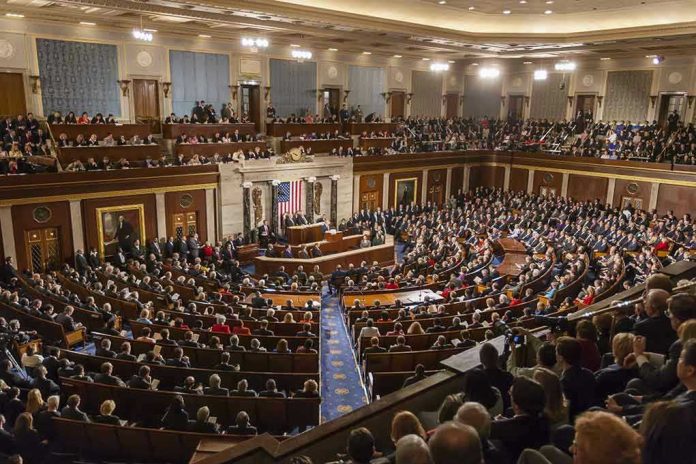
On April 28, 2026, King Charles III addressed a joint session of the U.S. Congress in Washington, D.C., becoming the second British monarch to do so after Queen Elizabeth II in 1991. The speech commemorates the 250th anniversary of the Declaration of Independence, a pivotal moment when America rejected monarchy to embrace self-governance. Charles, accompanied by Queen Camilla, arrived as part of a four-day state visit starting April 27. Congressional leaders and the White House coordinated the event, underscoring symbolic goodwill.
Calls for Unity Amid Tensions
King Charles urged the U.S. and UK to “come together” even when they do not agree, framing transatlantic friendship as a force for global reconciliation and renewal. He referenced shared history and recent violence, including a shooting at the White House Correspondents’ Dinner. Delivered against heightened domestic and geopolitical strains, the address promotes stability. Coverage aired live on C-SPAN, PBS, and YouTube, with full videos now available online. Conservatives view this emphasis on unity skeptically, prioritizing America First policies over foreign entanglements.
Context of Strained Relations
The U.S.-UK “special relationship” faces challenges from recent global issues since Charles ascended the throne in 2022. This rare royal address, hosted at the Capitol, occurs as Republicans hold Congress under President Trump’s second term. Democrats obstruct, yet the event proceeds non-partisan. It honors post-Revolutionary War reconciliation but revives debates on sovereignty. Many Americans, left and right, frustration with federal failures echoes in such spectacles, where elites signal harmony while citizens struggle with inflation, immigration, and energy costs.
Traditional conservative values stress limited government and individual liberty, questioning if such international overtures divert from domestic renewal. The speech’s timing amid tensions reinforces perceptions of a deep state favoring globalism over the American Dream.
FULL SPEECH: King Charles III addresses Joint Session of Congresshttps://t.co/jvNC75rWzU
— ConspiracyDailyUpdat (@conspiracydup) April 28, 2026
Implications for Transatlantic Ties
Short-term, the address boosts diplomacy and eases relational strains, fostering bilateral goodwill among U.S. and UK publics and policymakers. Long-term, it bolsters defense and trade sectors through alliance reinforcement. No direct economic impacts noted, but social narratives highlight reconciliation. Both conservatives frustrated by past globalism and liberals wary of America First find common ground in distrust of elite-driven events that sideline everyday hardships. This milestone signals continuity, yet underscores need for leaders focused on citizens, not pageantry.