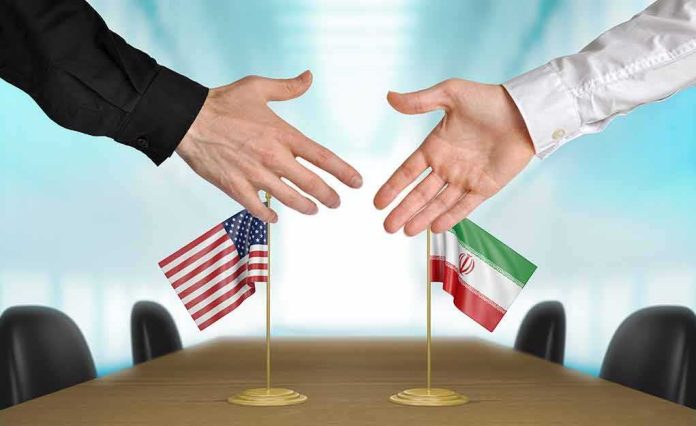
A shaky Iran-US deal is already looking fragile, and that should worry Americans who know weak diplomacy invites more chaos.
Quick Take
- The public memorandum says Iran will not seek nuclear weapons.
- The deal ties sanctions relief to performance, not promises alone.
- Switzerland talks were postponed, raising doubts about real progress.
- The agreement leaves major verification questions unanswered.
What the Switzerland track actually says
The public record shows a formal memorandum of understanding, not a finished peace pact. According to the released text and reporting from the Swiss Foreign Affairs office, the process includes a 60-day window for further talks and a staged rollout of steps tied to compliance.[1][3] That matters because the deal’s benefits do not arrive all at once. They depend on whether both sides keep moving through the sequence.
The strongest point in the public text is simple: Iran says it will not acquire or develop nuclear weapons.[1] The same memorandum links sanctions relief, port changes, and other benefits to execution over time, not to the act of signing alone.[1][3] For conservatives who want hard limits instead of paper promises, that conditional structure is better than a blank check. But a promise is not proof, and the record still lacks the full enforcement architecture.
Why the talks still look unfinished
The biggest red flag is that the Switzerland talks were postponed even as officials talked up progress.[3][9] Swiss officials said the planned meeting did not go forward, and White House remarks said the technical talks were not finalized.[3][9] That is not the same thing as a fully locked-in agreement. It is a reminder that diplomacy can be sold as momentum long before the hard details are settled.
Reporting also shows that key issues are still in dispute. The sources mention nuclear limits, sanctions relief, the Strait of Hormuz, Lebanon, and related regional security questions.[1][2][4] That mix matters because the more issues get bundled together, the easier it becomes for one breakdown to unravel everything. Americans have seen this pattern before. Big headlines come first. Durable results come much later, if they come at all.
What the public text leaves open
The published material does not show a complete inspection system, clear snapback rules, or a finished sanctions-relief timetable.[1][6] That gap is important. Without detailed verification, any claim that Iran’s nuclear program is truly peaceful rests more on trust than on proof. The available record also does not show independent confirmation that any stockpiles were dismantled, only that dismantlement or transfer was discussed.[3][6]
NEW: Iran says the Lebanon conflict between Israel and Hezbollah will top the agenda in today's Switzerland talks with the US, alongside frozen Iranian funds and oil sales, Foreign Ministry spokesman Esmaeil Baghaei says.
“The Zionist regime continues to violate its commitment…
— OSINT News (@OSINTNewsqrb) June 21, 2026
The broader concern for Americans is straightforward. A deal can sound strong while still leaving room for evasion, delay, and spin. The released memorandum is better than secrecy because it lets the public judge the text itself.[1][6] But the same text and the follow-up reporting show a process that is still in motion, still disputed, and still vulnerable to collapse if either side changes course.
Sources:
[1] YouTube – LIVE: Outside the venue of Iran-US talks in Switzerland
[2] Web – US-Iran memorandum of understanding in full – BBC
[3] Web – Iran, US presidents sign deal to extend ceasefire, reopen Strait of …
[4] Web – Memorandum of Understanding between the USA and Iran – the FDFA
[6] Web – The US and Iran are expected to formally sign a memorandum of …
[9] Web – 2025–2026 Iran–United States negotiations – Wikipedia