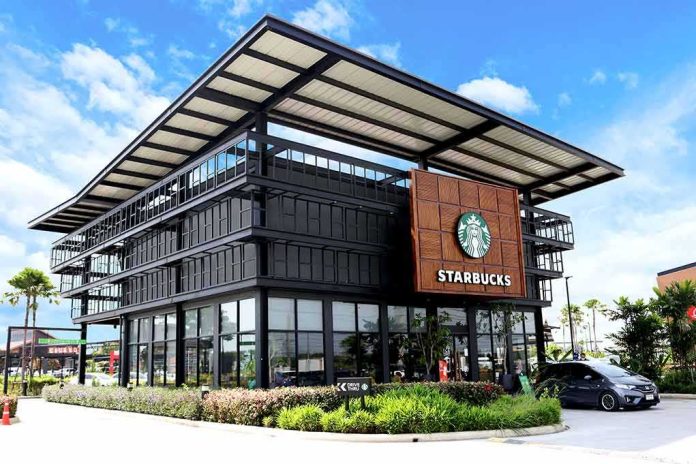
Pruning about 1% of a massive retail footprint is not retreat; it is how mature chains keep the store base productive and the brand experience coherent—and Starbucks’ decision to close roughly 250 North American locations fits that operational logic.
At a Glance
- Starbucks will shutter approximately 250 North American stores—about 1% of its footprint—targeted as underperforming or unable to meet the company’s experience standards.
- The move is part of a broader “Back to Starbucks” turnaround, aligning store economics and the in-cafe experience with strategy under CEO Brian Niccol.
- An employee letter from COO Mike Grams framed the closures as the outcome of a portfolio review; affected workers will be offered transfers where possible and severance otherwise.
- Reporting ties the action to a regulatory filing and one-time charges associated with lease terminations and personnel support.
What Starbucks actually decided—and why it matters
Starbucks is closing roughly 250 cafes across North America in the latest step of a multiyear reset of its store base. The rationale is explicit in an employee memo: the targeted locations either do not produce acceptable financial results or cannot consistently deliver the kind of experience Starbucks expects for customers and employees. The number—about 1% of the network—matters because it underscores scope. This is not an exit from markets; it is a portfolio rebalance aimed at improving unit-level productivity and brand consistency across a system of more than 18,000 North American stores. Multiple national outlets reproduced the memo language, and reporting connected the decision to a formal regulatory disclosure, placing it squarely within a planned, documented turnaround rather than a one-off retrenchment.
In practical terms, portfolio pruning tackles three problems at once: fixed-cost drag from low-volume stores, operational friction in sites whose layouts or lease terms impede service improvements, and experience gaps where staffing, traffic patterns, or configurations make it hard to deliver the company’s desired “third place” feel. The company says it will try to transfer employees to nearby locations and provide severance when that is not feasible—standard practice in a system dense enough to absorb displaced labor where geography allows.
How portfolio pruning works inside a mature chain
Large franchised and company-operated systems periodically run a “store economics and experience” screen: four-wall margins, sales trends, daypart mix, labor absorption, digital order throughput, lease escalators, and service metrics like ticket time and order accuracy. Locations that repeatedly fail a balanced scorecard—or cannot be brought into compliance due to physical constraints—become candidates for closure. In recent years, mobile order-and-pay reshaped kitchen and front-of-house flows; stores designed for lingering traffic struggled with surges of digital volume, while grab-and-go boxes sometimes underdelivered on hospitality. Starbucks’ turnaround aims to reconcile those tensions—speed without losing the social fabric that made the brand sticky—and pruning clears the way to invest where store shells and trade areas can support that model.
Crucially, the chain’s density allows revenue recapture. When an underperforming unit closes, a portion of sales typically migrates to nearby stores better configured for throughput and hospitality, improving aggregate returns without net new customers. That recapture dynamic is why 1% reductions can improve system profitability even if top-line revenue effects look modest in isolation; management trades unproductive square footage for healthier comps and unit economics.
Where this fits in the “Back to Starbucks” turnaround
The closures are a leg in a broader plan launched under CEO Brian Niccol to restore momentum after a period of pressured traffic and operational complexity. The strategy has emphasized operational simplification, redesigned roles to reduce barista multitasking, and cafe refreshes that support both digital demand and in-store connection. Portfolio review is the financial and physical counterpart to those operating changes: you upgrade what can be upgraded, relocate or consolidate where leases and layouts block progress, and exit where the numbers or experience simply do not pencil out.
That cadence—announce a strategy, realign incentives and processes, then rebase the store count—is familiar across retail and restaurant turnarounds. Starbucks already executed a prior wave of pruning; this second round signals discipline rather than drift, and coverage consistently ties the action to the same playbook rather than to an exogenous shock.
What we know—and what we don’t need to speculate about
The company has not published a full list of locations or a rubric defining “acceptable” performance and experience, a common constraint in competitive retail. Still, the core facts are not in dispute: a memo from the chief operating officer set the criteria, multiple outlets reported the same language, and a regulatory filing underpins the charges associated with closures and severance. In short, the announcement rests on standard corporate documentation and broad media corroboration, not rumor. The closure count is framed as approximate, which is typical when execution spans weeks and lease negotiations vary by site.
From a labor and community standpoint, the near-term impacts are concrete: employees face transitions, and neighborhoods lose or shift a familiar meeting point. Starbucks’ transfer-and-severance posture softens but does not eliminate that disruption. In dense markets, absorption is easier; in rural or single-store towns, options narrow. Over the medium term, experience usually normalizes as demand redistributes to surviving stores that are better staffed, better laid out, and better equipped to deliver consistent service.
How investors and operators should read this move
For operators, the lesson is operational orthodoxy: protect four-wall margins, align formats with demand, and avoid legacy constraints that block service improvements. Pruning is not a sign of brand collapse; it is a prerequisite to redeploying capital into stores with higher returns and into remodels that support the service model you intend to scale. If the turnaround continues on plan, subsequent data should show healthier comps in remaining cafes, improved order flow metrics, and better labor productivity as redesigned roles meet redesigned spaces.
For investors, the headline number matters less than the follow-through. Look for three confirmations: first, that lease exit and severance charges are one-time and do not balloon; second, that recapture lifts unit economics in overlapping trade areas; and third, that refreshed stores sustain both digital throughput and in-cafe attachment—food attach, premium beverages, and dwell-driven occasions. Regulatory filings and subsequent earnings updates typically surface these signals; early reads often appear in narrative disclosures before filtering into clean, year-over-year comp math.
The market agrees with your taste buds. Starbucks announced 250 store closures across North America this week, all underperforming locations, on top of a wave of closures last September. The Seattle roastery is on the list too. CEO Brian Niccol is running a $1 billion turnaround…
— Fuelmeup (@fuelmeupcc) September 26, 2026
The bigger picture: brand experience is an operating system, not decor
Starbucks’ stated filter—financial viability and the ability to deliver a consistent experience—captures the modern restaurant paradox. Digital convenience grows reach and frequency; hospitality creates attachment and pricing power. The stores that thrive operationalize both in their floor plans, staffing patterns, and equipment choices. Stores that can’t be reconfigured for that blended model—because of leases, footprints, or surrounding demand—drag on the system. Closing them is not an aesthetic preference; it is an operating decision to keep the brand’s promise deliverable at scale. The company is acting like a mature retailer should: tightening the base, investing in formats that fit the future, and letting accounting reflect the cost of getting there.
Sources:
apnews.com, cnn.com, investopedia.com