
A pleasure boat outing near Alcatraz turned into a deadly mystery that exposed how even basic facts can get lost when American institutions scramble to respond and explain.
Story Snapshot
- One adult man is confirmed dead after a pontoon boat capsized and sank near Alcatraz Island.
- Officials now say about 20 adults were aboard; 16 were rescued, and at least three remain missing.
- Early reports pushed a “boat fire” narrative that officials later walked back, deepening public distrust.
- The cause of the sinking is still unknown, and conflicting numbers from agencies and media add to confusion.
Deadly capsizing during a memorial trip in San Francisco Bay
On Tuesday afternoon, a memorial boat trip in San Francisco Bay turned tragic when a large pontoon vessel capsized and sank near Alcatraz Island. Authorities say the boat was carrying mostly family members who had gone out to honor a loved one, turning what should have been a peaceful gathering into a mass rescue and recovery operation. Fire officials describe the boat as a three-deck pontoon that was almost fully underwater when crews arrived, with its engine still running and leaking fuel into the bay.
San Francisco Fire Chief Dean Crispen reported that **one adult man died** after being pulled from the water and receiving cardiopulmonary resuscitation before being pronounced dead on shore. Officials say **16 people were rescued** from the water and taken to nearby marinas for medical checks and support. Three people were transported to hospitals in stable condition and were expected to be released later that day, while emergency teams continued to search for those still missing.
Conflicting counts of passengers and missing people
From the start, basic facts like how many people were on board and how many were missing kept changing, which is exactly the kind of thing that frustrates many Americans watching from home. Early statements from fire officials and the United States Coast Guard said **19 people were aboard** and that crews were searching for **two missing passengers**. Later updates from local media and city officials raised that number, saying **20 adults** were on the boat, with **three people unaccounted for**.
These shifting numbers matter because they shape how people judge the competence and honesty of the agencies in charge. When one outlet reports one missing person, another says two, and yet another says three, it feels like the system cannot even agree on who needs help. Fire Chief Crispen later explained that the count changed as more witnesses were interviewed and as rescuers compared lists of passengers and family members. Still, the pattern of early confusion fits a wider concern: people on both the left and the right increasingly see official information as unstable or incomplete.
“Boat fire” narrative versus what rescuers actually saw
Many headlines and social media posts told Americans that a “boat fire” or “explosion” near Alcatraz had left people dead and missing, yet fire officials say they have **no direct evidence of flames** from their own crews or police officers. Initial calls to 911 described a vessel ablaze about 600 yards from Alcatraz, and news outlets quickly repeated those words in breaking alerts and live videos. By the time Chief Crispen spoke at an afternoon press briefing, the idea of a burning boat was already cemented in the public mind.
Crispen said responders arriving on scene found a capsized pontoon boat, people in the water, and others falling overboard, but none of his personnel witnessed an active fire. At least one report now suggests the vessel may have been hit by a wave, causing it to roll and sink rather than burn. This confusion mirrors patterns seen in other marine accidents, where smoke, fuel leaks, or scattered debris lead to early claims of fire or explosion that later turn out to be wrong once investigators analyze the wreckage and interview witnesses. For citizens already wary of “spin,” the fast spread of the fire story, followed by official denial, looks like yet another example of institutions rushing to shape the narrative before facts are firm.
Large multi-agency search raises questions about readiness and safety
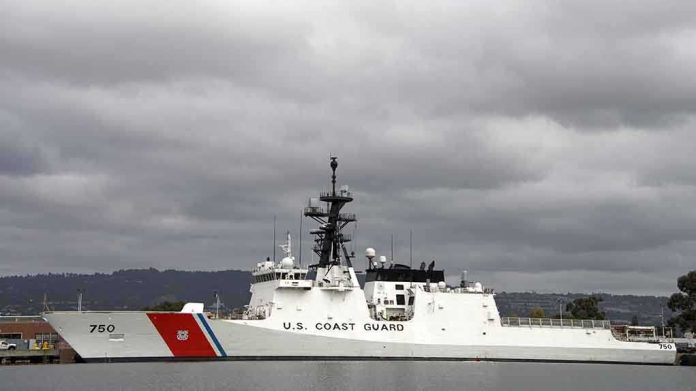
Firefighters, police marine units, and the United States Coast Guard launched what they called an “all-hands” search effort that stretched into the night. Chief Crispen said **11 vessels**, divers in the water, and aircraft overhead were focused on likely areas where survivors might be found, stressing that crews would stay in “full rescue mode” as long as conditions remained safe. White caps and choppy water made the search harder, reminding many viewers how suddenly a day on the bay can become life-threatening.
One person has died and two remain missing after a pontoon boat caught fire near Alcatraz Island in San Francisco Bay, prompting a major search-and-rescue operation.#wicnews #UnitedStates #SanFrancisco #Alcatraz #BoatFire #BreakingNews #SearchAndRescue #MarineAccident… pic.twitter.com/a3L7czrL0u
— WIC News (@WIC_News) July 15, 2026
The boat, identified in some reports as the Volare, was based out of Stockton and had traveled into the bay for the memorial service. Officials say all passengers were adults and that a dog aboard the vessel also died. Investigators have not yet determined what caused the boat to capsize or whether any mechanical failure, human error, or safety violations were involved. It is also still unclear how many passengers wore life jackets, a basic safety step that often separates survival from tragedy when boats sink quickly in cold, rough water.
Why this small disaster hits a national nerve
For many Americans, this story is not just about one boat accident; it reflects deeper fears that systems meant to protect and inform the public are slow, confused, or more focused on managing image than truth. People on the right see the incident as another sign that basic safety, competence, and common sense have slipped, even as government agencies grow larger and more expensive. People on the left see ordinary families put at risk while the broader gap between the powerful and everyone else keeps widening.
When a simple question like “How many people were on the boat?” cannot be answered cleanly for hours, it feeds the belief that the so-called elites and bureaucracies are not truly in control, or are not telling the full story. The Alcatraz capsizing is still under investigation, and officials may yet give clear answers about what went wrong. Until then, the mix of real tragedy, shifting facts, and headline-driven narratives will continue to shape how Americans judge the institutions that claim to keep them safe—on the water and everywhere else.
Sources:
youtube.com, abcnews.com, timesnownews.com, cbsnews.com, facebook.com, instagram.com, straitstimes.com