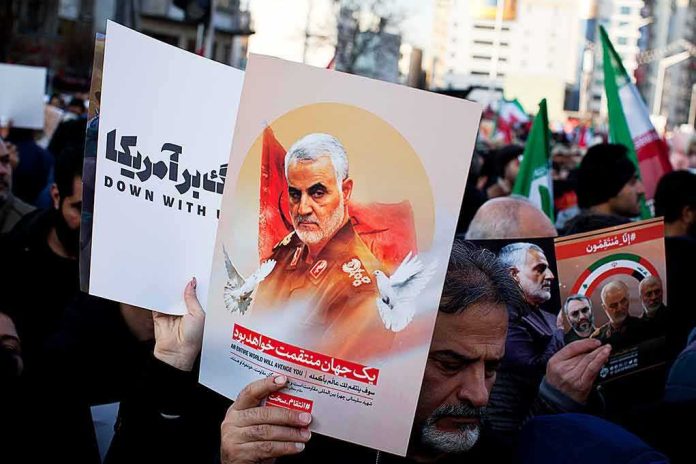
Chants of “We will kill you” aimed at President Trump rang out at Ayatollah Khamenei’s funeral, forcing fresh focus on real security threats to an American president.
Story Highlights
- Funeral crowds in Tehran displayed banners threatening to kill President Trump.
- Reports attribute Khamenei’s death to a joint United States–Israel airstrike on February 28, 2026.
- Senior Iranian officials and foreign delegations attended the dayslong ceremonies.
- Claims of a $100 million “bounty” appeared on signs but lack official confirmation.
Chants, Threat Banners, and a Security Reality Check
Video and wire reports from Tehran show mourners chanting “Kill Trump” and carrying banners that read “We will kill you” during Ayatollah Ali Khamenei’s funeral events. The Associated Press documented the threats appearing in the crowd, alongside flags and slogans calling for revenge. These scenes came as Trump acknowledged persistent threats tied to the conflict. Secret Service planning and public travel optics now center on a plain fact: Tehran’s rhetoric targets America’s elected leader, which demands vigilance, not denial.
Coverage of the funeral noted large crowds and an intense, organized atmosphere. The Associated Press described mourners surging through Tehran during the multiday ceremonies, while also highlighting senior regime figures at key events. These optics serve Iran’s political goals at home and abroad. They also send a message aimed at the United States. When chants call for the death of a sitting American president, it sharpens the need for layered protection and clear deterrence from Washington.
What Sparked the Fury: The Strike That Killed Khamenei
International reporting attributes Khamenei’s death to a joint United States–Israel strike on February 28, 2026. Reuters reported that the airstrike hit his compound and confirmed the outcome, anchoring later funeral rhetoric in a wartime frame. That strike decapitated Iran’s leadership at a critical moment. Tehran’s leaders answered with vows of revenge at public events, and state-aligned media leaned into the message. The result: a charged funeral that doubled as a rally for retaliation.
Diplomatic spectacle added weight to the stagecraft. The Associated Press and other outlets described attendance by top Iranian officials and foreign delegations during the processions, which Tehran framed as a national farewell for a wartime leader. Such scenes help Iran craft a narrative of unity and grievance. But they do not change core facts. Chants promising violence against an American president crossed from domestic messaging into threats that U.S. security professionals must treat as actionable risk.
Sorting Facts from Hype: Bounty Claims, Crowd Size, and Limits
Some signs at the funeral touted a “$100 million” bounty to kill Trump. The Associated Press described those images in the crowd, but no official decree has confirmed an authorized, state-funded bounty at that figure. That matters. Americans need clear lines between what Iran’s regime sanctions, what crowds chant, and what is proven policy. Large turnout claims also varied across outlets, and estimates can be political. Solid reporting confirms big crowds, but not precise, verified totals.
You apparently didn't see the banners at the iranian leaders funeral that said "we will kill trump…"
Youre kind of an idiot . They announced it. And we Americans won't stand for it!— Jeremy Russell (@Jremy2023) July 10, 2026
For readers at home, the takeaway is simple. Iran’s public rhetoric is loud and hostile, and much of it is designed for internal unity and regional signaling. But when those words threaten our president by name, the United States must answer with strength and prudence. The Trump administration’s job is to protect Americans, defend our Constitution, and keep faith with allies. That means tightening security, keeping pressure on terror networks, and refusing to be bullied by a funeral chant.