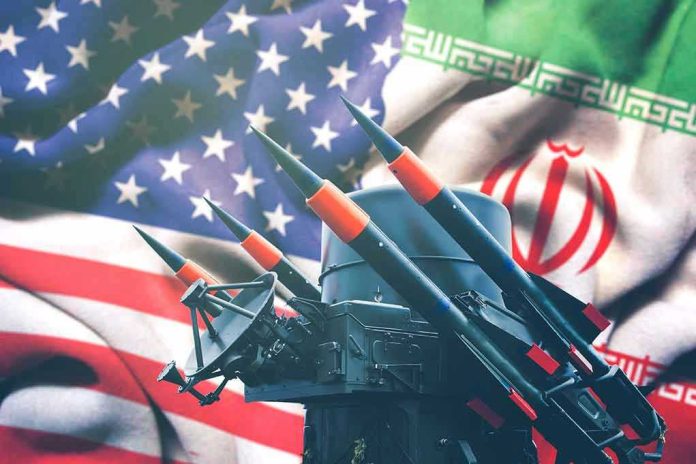
President Trump’s blunt rejection of Iran’s ceasefire proposal signals the fragile month-long truce is collapsing, threatening renewed conflict in the Middle East and potential global energy disruption.
Quick Take
- Trump rejected Iran’s ceasefire response as “unbelievably weak” and “garbage,” declaring the truce “on massive life support” with only a one percent survival chance
- Iran demanded sanctions relief, port blockade removal, and asset unfreezing but refused U.S. demands for nuclear program dismantlement
- The impasse centers on Iran’s nuclear ambitions—a non-negotiable red line for the Trump administration
- New sanctions announced; military consultations underway as drone interceptions continue in the Persian Gulf
The Ceasefire Collapses Under Nuclear Disagreement
The month-long ceasefire between the United States and Iran, brokered after approximately two months of active warfare, faces imminent collapse. President Trump rejected Iran’s latest proposal as fundamentally unacceptable, describing it with language ranging from “garbage” to “stupid.” The Iranian response, conveyed through Pakistani mediators, failed to address the Trump administration’s core demand: dismantlement of Iran’s nuclear program. Trump stated unequivocally, “Iran cannot have a nuclear weapon,” signaling zero flexibility on this issue.
Iran’s Demands Ignore Nuclear Dismantlement
Iran’s counterproposal focused on economic and territorial concessions rather than nuclear commitments. Tehran demanded lifting of U.S. sanctions on oil sales, removal of the American blockade on Iranian ports and the Strait of Hormuz, unfreezing of Iranian assets, and reparations for war damages. Notably absent from Iran’s response was any willingness to dismantle or significantly curtail its nuclear enrichment program. This omission represents a fundamental negotiating impasse that neither side appears willing to bridge, leaving the ceasefire in what Trump characterized as a precarious state.
Economic Leverage and Strategic Stalemate
The dispute reflects deeper strategic calculations. Iran, facing severe economic sanctions and a blockaded Strait of Hormuz—a critical global oil chokepoint—seeks relief to stabilize its economy and regional standing. The United States, supported by Israel and Gulf allies, views Iran’s nuclear capability as an existential threat to regional stability and refuses concessions without verifiable nuclear rollback. Trump’s decision to impose additional sanctions and consult military commanders suggests the administration is preparing for potential conflict resumption if diplomatic channels remain deadlocked.
Shadow Drone War Persists Amid Ceasefire
The fragility of the ceasefire extends beyond diplomatic disagreements. Intelligence reports confirm ongoing drone interceptions over the Persian Gulf, Kuwait, and the United Arab Emirates during the weekend of May 9-10, indicating that Iran continues operating unmanned systems despite the supposed truce. These “shadow war” activities suggest both sides maintain military readiness and are unwilling to fully stand down, even as formal negotiations continue. This pattern mirrors Iran’s historical asymmetric strategy: leveraging proxy forces, drone capabilities, and regional non-state actors to offset conventional military disadvantages.
Trump Administration Signals Military Options Remain on Table
By announcing consultations with military commanders and new sanctions, the Trump administration signaled that military options remain viable if diplomacy fails. The President’s vivid language—describing the ceasefire as having only a “one percent chance of living”—reflects frustration with Iranian negotiating tactics and domestic pressure from Republicans demanding a decisive resolution. The administration’s hardline stance aligns with campaign promises to prevent Iran from acquiring nuclear weapons and maintain American military dominance in the Middle East.
Regional Implications and Global Energy Markets
Renewed U.S.-Iran conflict would destabilize the Middle East and trigger significant global economic consequences. The Strait of Hormuz, through which roughly one-third of global seaborne oil passes, faces blockade risks if hostilities resume. Oil prices, already volatile due to the existing conflict, would spike further, exacerbating inflation concerns for American consumers already frustrated with rising energy costs. Gulf states including the UAE and Kuwait, hosting U.S. military assets and facing Iranian drone threats, remain caught between superpower tensions and their own security interests.
Sources:
Iran Dismisses Trump’s Rejection of Tehran Response to Peace Plan – Investing.com
Trump Rejects Iran’s Latest Response to U.S. Ceasefire Proposal – NPR
Trump Rejects Iran’s Ceasefire Proposal – Fox Baltimore
Trump Says Iran Ceasefire on Life Support After Rejecting Proposal – ABC News 4