
As media fixates on a rising death toll, questions about proof, process, and transparency threaten to overshadow a hard-hitting maritime campaign aimed at choking off cartel pipelines to our shores.
Story Snapshot
- U.S. strikes targeted suspected drug-trafficking boats across the Caribbean and eastern Pacific, with officials framing the effort as counter-cartel action [1][2].
- Reported deaths have surpassed 199 amid more than 60 strikes, signaling a sustained operation rather than a one-off incident [1][2].
- Critics cite limited public evidence of on-board drugs and unresolved legal questions, fueling scrutiny of targeting and accountability [1][2].
- Released strike videos show moving vessels being hit, yet identification details of most casualties remain undisclosed publicly [1][2].
Documented Scope of a Months-Long Maritime Campaign
Associated Press reporting states the U.S. military has conducted a months-long campaign beginning last September against suspected drug-trafficking boats in the Caribbean Sea and eastern Pacific Ocean, emphasizing counter-cartel objectives rather than conventional warfare [1]. Open-source tallies describe at least 60 strikes on 61 vessels across both theaters, with operations recorded in the Caribbean and the eastern Pacific, underscoring organized, persistent targeting rather than isolated actions [2]. Publicly released videos from U.S. Southern Command depict boats being struck and engulfed in flames, aligning visuals with official claims of real-time interdictions [1].
Government statements frame the mission squarely as counter-narcotics, with President Trump highlighting the destruction of illegal narcotics bound for the United States and the killing of cartel-linked personnel, including references to Tren de Aragua in early strikes [2]. Reported fatalities have climbed beyond 199, with evolving counts reflecting both new strikes and additional confirmations over time [1][2]. The breadth of activity—spanning two maritime regions—suggests a strategic effort to disrupt sea-based trafficking corridors before cartel cargoes reach Central America, Mexico, or the U.S. coastline [2].
Evidence Gap: What Is Known and What Remains Classified
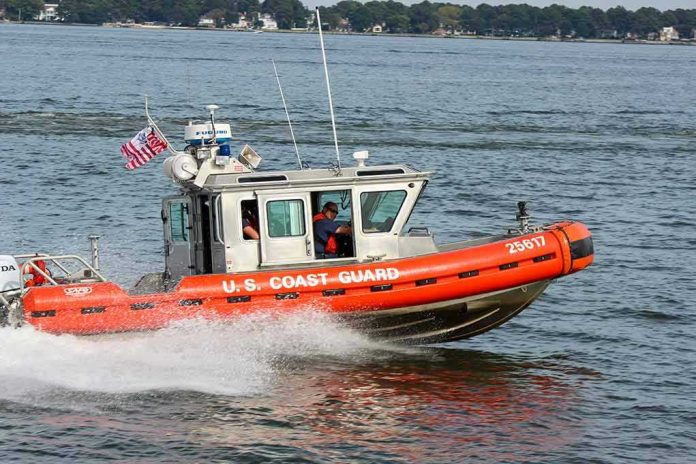
Public reporting repeatedly uses terms such as “suspected” and “alleged,” and does not include cargo manifests, seizure records, or chain-of-custody documentation from the specific boats that were struck, leaving an evidentiary gap visible to outside observers [1][2]. Many of the deceased have not been publicly identified, which limits independent confirmation that each targeted crew member was a cartel operative or trafficker [2]. The U.S. military has confirmed instances of survivors and Coast Guard involvement in rescue or transfer, but comprehensive target-development files have not been released [1].
Critics argue these conditions risk turning counter-narcotics into opaque lethal action at sea, pointing to questions about legality and proportionality that the Pentagon Inspector General review reportedly will not fully adjudicate, since legality is outside its stated scope [1][2]. That narrow audit lane leaves the most sensitive issue—what legal authorities and rules of engagement governed each strike—unresolved in the public record. The lack of publicly shared methodology for distinguishing traffickers from non-traffickers sustains skepticism even as operations continue [1].
Security Goals Versus Transparency Demands in a High-Stakes Fight
Administration officials present the campaign as a forward defense of American communities: disrupt the transport nodes, starve the cartels, and reduce the poison entering our neighborhoods [2]. Conservative readers recognize the stakes—families pay the price when fentanyl and cartel violence spill over the border—and understand why classified intelligence drives maritime interdiction. Yet prudent governance also requires visible accountability to keep the mission on firm legal and constitutional footing, protecting both national security and the rule of law [1][2].
Balanced oversight steps could defuse doubts without compromising sensitive sources: release redacted targeting summaries, provide post-strike recovery and transfer logs, and facilitate sworn testimony from operational and legal officials, as feasible within security limits [1][2]. Such documentation would clarify how vessels were identified, what indicators triggered lethal action, and how survivors and remains were handled. Transparency that respects operational security would strengthen public trust, undercut adversarial narratives, and affirm a core conservative principle: tough on crime, accountable to the law.
Sources:
[1] Web – Death toll from U.S. strikes on alleged drug boats climbs above 200
[2] Web – Recent survivors of US boat strikes haven’t been found, bringing …