British media downplayed the cause of Belfast’s riots even as police named a Sudanese asylum seeker in a stabbing case.
Story Snapshot
- Police and reporters identified a Sudanese asylum seeker as the stabbing suspect [1][3].
- Violent anti-immigration protests erupted in Belfast after the arrest [1][3].
- Officials blamed online incitement while urging calm and order [1].
- Key details on dates and status remain uncertain in public reports [3].
Police Identification And Immediate Street Unrest
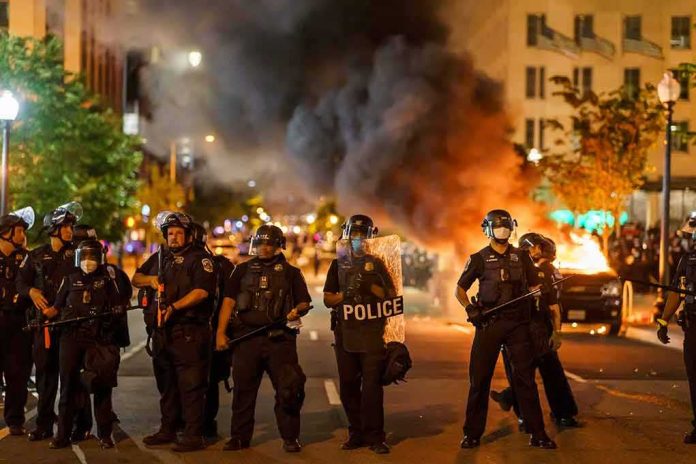
Police Service of Northern Ireland leaders said the stabbing suspect was a 30-year-old man from Sudan who claimed asylum after traveling through Europe. Reporters described how protests flared in Belfast soon after news of the arrest spread. Crowds torched vehicles and damaged property as anger focused on immigration and safety. These events formed a clear sequence: a named suspect, a serious attack, and a fast jump to street clashes labeled as anti-immigration riots by major outlets [1][3].
Journalists recorded protesters saying they were driven by fears of crime linked to recent migrants. Video reports captured people voicing worries about “migrants coming to the United Kingdom and then committing crime.” That on-the-ground testimony matched the framing used by several outlets that called the events “anti-immigration” riots. The description connected a single violent act to existing public tension over border control and local capacity in a city with long memories of disorder and tight-knit communities [2][1].
Officials Emphasize Incitement And Process Over Policy
Top officials condemned the violence and highlighted online posts that helped mobilize crowds. The United Kingdom’s media regulator warned platforms about content that could incite violence tied to the Belfast unrest. Police reminded the public that this is a criminal case under investigation and not a verdict on immigration policy. Leaders asked for calm while courts and investigators do their work, seeking to keep the focus on law and order and stop the situation from spiraling into wider conflict [1].
Police statements also carried caveats. The chief constable noted that some details about the suspect’s travel route and status still needed confirmation. Reporting said the suspect was not known to police or national security databases. Courts had begun processing the case, but there was no plea entered in the early coverage. This stress on due process, and on uncertainty about certain facts, pushed back on rush-to-judgment claims that try to settle broad policy debates from one case [3][1].
What We Know, What We Do Not, And Why It Matters
Three facts are solid in the public record. First, police and reporters identified the suspect as a Sudanese asylum seeker. Second, protests and riots followed that arrest. Third, leaders and watchdogs said online calls helped fuel the unrest. What remains less clear are exact dates, the suspect’s movement through Europe, and any official status decisions. Those gaps limit sweeping claims that turn one event into a complete verdict on national immigration policy [3][1].
THE BELFAST ‘STABBING’ – WHAT IT REALLY WAS
On Monday June 8th 2026, at approximately 10:30 pm British time, Stephen Ogilvie (a man in his 40s) was set upon by Hadi Alodid, a 30-year old Sudanese refugee.
Stephen was pinned down and repeatedly stabbed and slashed across his… pic.twitter.com/sRYvdE5Gsq
— Mark Rowley (@MarkWRowley) June 12, 2026
For conservatives, two lessons stand out. Communities expect secure borders and honest debate, not censorship or spin. People also deserve clear, verified facts before elites shut down questions as “incitement.” Authorities should release primary records fast: the custody log, charge sheet, and full press briefing transcript. That would confirm what is known and correct what is not. Transparent facts calm streets better than lectures, and they keep trust with citizens who play by the rules [1][3].
Sources:
[1] Web – Belfast Is Burning, and the Media Won’t Say Why
[2] Web – Belfast stabbing suspect in court after night of protests
[3] YouTube – Horrific stabbing attack sparks anti-immigration protests in …