
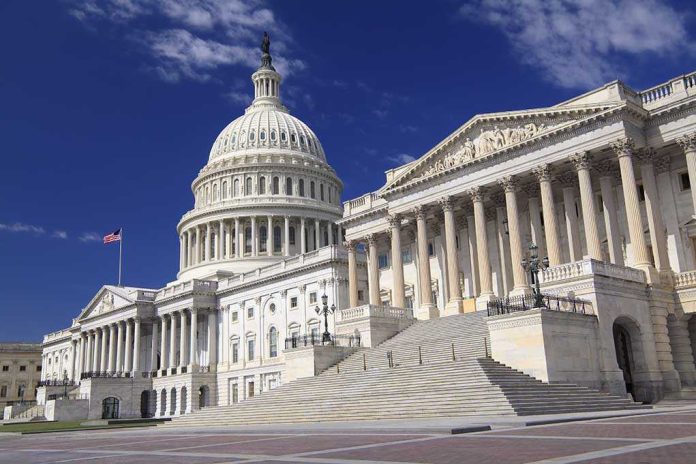
A day after sealing a sanctions deal with the White House, Senator Lindsey Graham’s sudden death removed one of Washington’s strongest interventionist voices and raised urgent questions about who now steers GOP foreign policy momentum.
Story Highlights
- A medical examiner said Graham died from an aortic dissection at age 71.
- Graham met with Ukraine’s president and pushed new Russia sanctions days before his death.
- A bipartisan sanctions agreement suggests some policy momentum will continue without him.
- Republican foreign policy splits could sharpen as “America First” and hawkish wings vie for control.
Confirmed Cause of Death and Immediate Impact
The District of Columbia medical examiner said a torn aorta caused by hardened arteries led to Senator Lindsey Graham’s death at 71. Reports called it sudden and shocking, ending a Senate career that spanned more than two decades. The timing hit at a sensitive moment for foreign policy work on Russia, Iran, Israel, and Ukraine. Allies and critics alike now must assess who will carry his global agenda and how fast the Senate can regroup around next steps.
South Carolina law calls for the governor to appoint a temporary replacement, which keeps the seat in Republican hands. The choice will matter. A pick aligned with “America First” priorities could push restraint. A more traditional hawk could preserve pressure on Russia and Iran. Until that decision lands, both parties will test the limits of Senate math and committee dynamics while sensitive bills move through a narrow calendar.
Graham’s Final Push on Russia and Ukraine
Two days before his death, Graham visited Ukraine and met President Volodymyr Zelensky, underscoring his focus on deterring Russia and sustaining Kyiv’s defenses. The day before he died, a bipartisan group that included Graham reached agreement with the White House on new Russia sanctions, signaling traction that does not rely on one lawmaker alone. The deal could even gain sympathy votes after his passing, though actual passage will depend on floor time and House alignment.
That momentum matters because it shows existing coalitions were already built into the process. Committee chairs, staff, and engaged senators can move a negotiated package even after a key champion is gone. Yet Graham’s knack for public pressure and cross-aisle bargaining will be hard to copy. Without his voice, advocates must find fresh messengers to keep sanctions strict and to defend ongoing Ukraine aid in a crowded domestic agenda.
The GOP’s Split: Hawks Versus “America First”
Republican foreign policy has long had two camps: traditional national security hawks and “America First” restraint advocates. That split has grown more public in recent years, with clashes over how much to back Ukraine, how to handle Iran’s nuclear ambitions, and how far to go on sanctions and defense spending. Graham often pushed hard for action overseas while still keeping ties to the party base. His absence removes a visible broker inside that divide.
Hawkish pressure does remain. More than 100 veterans of prior Republican administrations and military figures urged more aid to Ukraine, signaling organized support beyond a single senator. Some Republican lawmakers also push for stronger action to stop Iran from getting a nuclear weapon, a line Graham pressed as well. But it is not yet clear which named senators will claim his old space, or whether any can pair Trump-world access with cross-aisle dealmaking at the same level.
What Changes Now—and What Probably Won’t
History shows one leader’s loss rarely flips U.S. foreign policy on its own. Policies tend to hold unless institutions, public opinion, or the White House shift at the same time. Still, the absence of a strong advocate can slow action, blunt media focus, and weaken coalition discipline. That is the risk for Ukraine aid, new Russia penalties, and pressure campaigns on Iran if no one steps up to manage both policy and politics in Graham’s lane.
One data point cuts against the “drift” story: the Russia sanctions agreement announced right before Graham died. That deal shows staff work, White House ties, and bipartisan buy-in were already in place. The test ahead is execution. Senate leaders must set votes, House leaders must align, and the administration must enforce. Voters across left and right, who doubt Washington’s focus and fear elite spin, will judge results by simple measures: tougher penalties on Moscow, clear support for allies, and honest costs at home.
Sources:
realcleardefense.com, foxnews.com, abcnews4.com, townhall.com, en.wikipedia.org, easternherald.com, independent.co.uk, responsiblestatecraft.org