Two unrelated mishaps on the same day—a smoke event inside CIA headquarters and a classified-network slowdown at the NSA—illustrate a durable truth about secure institutions: proximity in time is not causation, and routine technical faults can look like national-security crises from the outside.
At a Glance
- Fairfax County firefighters responded to CIA headquarters after reports of smoke; crews traced it to HVAC equipment and found no fire.
- Parts of the building were cleared as a precaution; ventilation and checks followed, with no injuries reported.
- The NSA separately reported a temporary degradation on a classified internal network during scheduled maintenance; mission-critical functions remained online.
- No evidence links the CIA smoke response to the NSA network event; the record supports coincidence, not coordination.
What happened: a smoke response, not a fire, at CIA headquarters
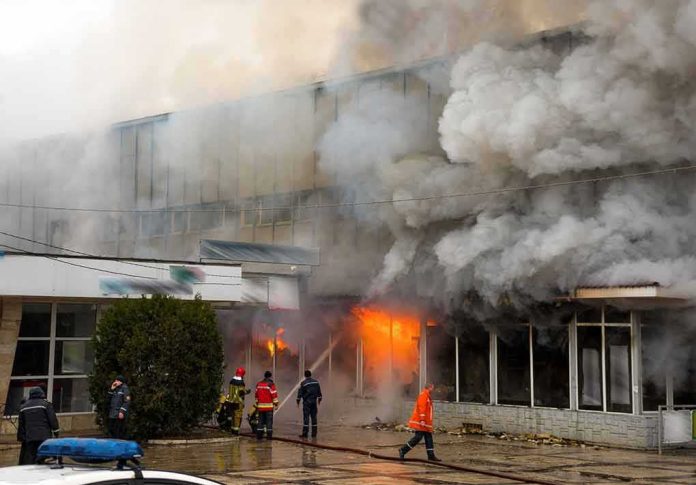
Shortly after 5 p.m. on November 17, 2026, Fairfax County Fire and Rescue units were dispatched to the CIA’s McLean, Virginia campus for reports of smoke inside a building. On scene, crews traced the smoke to heating, ventilation, and air conditioning (HVAC) equipment; they reported no visible fire and gave the all‑clear after ventilating the affected area. Publicly released details are consistent across independent outlets: smoke associated with HVAC hardware, precautionary building clearance, no injuries, and an all‑clear once conditions normalized. One early headline described a “small fire,” but the strongest official account from the responding department states plainly that no fire or other emergency was found and that the source was HVAC-related.
That sequence—dispatch, source identification, ventilation, return to service—is the textbook pattern for a smoke call in a hardened, high-occupancy facility. Secure campuses employ conservative life-safety protocols for good reason: a small wisp in the wrong chase can travel rapidly, and the marginal cost of a false alarm is trivial compared with the cost of missing a genuine ignition. In such settings, “evacuated as a precaution” is descriptive of the playbook, not evidence of an escalating hazard.
What happened at the NSA: a maintenance window that degraded service
On the same day, the National Security Agency acknowledged a temporary degradation on a classified internal communications network during scheduled routine maintenance. The agency emphasized that mission-critical capabilities remained operational throughout the episode. The NSA’s on-the-record statement characterizes the event as a maintenance-period impact rather than an attack or uncontrolled failure—a framing echoed in contemporaneous reporting that found no indication of a hostile cause.
For readers outside defense networking, a “temporary degradation” during a change window is unsurprising. Classified enterprise systems operate under rigorous change-control procedures; software upgrades, key rotations, and hardware replacements are timed, staged, and—despite rehearsals—can briefly impair parts of a complex stack. The operational guardrail is continuity of mission-critical functions, which the agency explicitly affirmed remained online.
Why the same-day timing invites speculation—and why the evidence doesn’t support it
Place a smoke response at CIA and a classified-network slowdown at NSA on the same calendar, and a pattern-seeking public will infer linkages. That reflex is understandable; modern risk discourse is saturated with scenarios of coordinated physical and cyber disruption. But the record here points in the other direction. Firefighters attributed the CIA incident to HVAC equipment and reported no fire; the NSA attributed its issue to scheduled maintenance, with essential operations preserved. No official statement, document, or named source ties the two events together, and none of the stronger accounts contradicts the agencies’ explanations.
This is not to trivialize either incident. A smoke condition inside a sensitive building automatically triggers a conservative response, and a classified-network slowdown inconveniences real work. It is to insist on evidence. When the best-sourced version of events is mundane—a failed variable-air-volume box, a maintenance window that ran hot—the responsible interpretation is that two different, ordinary problems occurred on the same day.
Fairfax County firefighters responded to reports of smoke inside a building at CIA Headquarters in McLean, Virginia, just after 5 p.m. on Tuesday.
The incident, which prompted an evacuation, took place during a week of mass outages at major companies and government agencies.… pic.twitter.com/BYT3FjZb49
— The Gateway Pundit (@gatewaypundit) November 18, 2026
Mechanics behind the headlines: HVAC smoke and classified networks
HVAC systems in large facilities are sprawling mechanical ecosystems: air handlers, chillers, boilers, variable air volume (VAV) boxes, electrical drives, belts, and filters distributed across floors and chases. Smoke without flame is common when a motor winding overheats, a belt slips, dust on a heating element pyrolyzes, or insulation cooks under load. The odor and haze can migrate quickly through ductwork, prompting detectors and occupant reports long before any ignition hazards materialize. In a secure facility, engineers and first responders isolate the suspect unit, test for heat signatures, meter for gases, and ventilate. With no heat source or active flame, the path back to occupancy is methodical but swift.
Classified networks, by contrast, are segregated from public internet paths and layered with compartmentation. NSANet and its analogs carry sensitive traffic subject to accreditation rules that mandate patch cycles, crypto updates, and hardware refresh—all of which require maintenance windows. A “temporary degradation” during such a window can mean anything from increased latency to limited access for subsets of users. The operational benchmark is whether priority missions—signals collection, analysis workflows, time-sensitive tasking—remain served. The NSA’s statement indicates those thresholds were met.
Context and consequence: what matters and what doesn’t
Two consequences flow from reading these incidents correctly. First, the life-safety systems and protocols at a high-security campus worked as intended: reports of smoke triggered a conservative response, professionals found the cause, confirmed the absence of fire, and cleared the space. That is not a “near miss” in need of grand theories; it is precisely the safety culture you want. Second, a classified network absorbed maintenance-related turbulence without sacrificing critical functions. In a world crowded with genuine cyberattacks and supply-chain defects, that’s the base case, not the headline.
The larger analytical error is to treat temporal adjacency as probative. Experts spend careers building discipline against that bias: intelligence analysts distinguish co-occurrence from coordination; safety engineers separate symptom from root cause; network operators measure impact against change tickets. Here, the best available accounts are explicit and specific: HVAC smoke at CIA, maintenance degradation at NSA. There is no evidentiary bridge between them, and none is needed to explain either event on its own terms.
Sources:
thegatewaypundit.com, nsa.gov, bnonews.com, hindustantimes.com, economictimes.indiatimes.com, fox5dc.com