
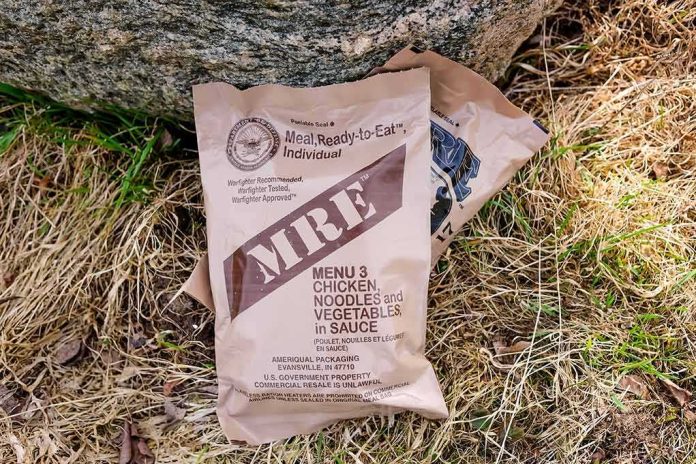
Titles in the Army are signals of doctrine as much as job labels; the redesignation of the 92G occupation to “tactical field feeding specialist” is best read as the Army declaring that feeding soldiers in a contested battlespace is a combat enabler, not a back-office service.
At a Glance
- The title change is official: the Army redesignated 92G at a ceremony on October 30, 2026, at Fort Lee, Virginia.
- Rationale: the role encompasses tactical operations, logistics, and contested-environment sustainment beyond kitchen work.
- Duties already spanned supervision, supply, food safety, mobile kitchens, and compliance — not just cooking.
- Evidence of new outcomes is thin; reporting suggests core tasks remain largely the same despite the rebrand.
What the redesignation changes — and what it doesn’t
The Army did not float a euphemism; it executed an official redesignation of the 92G military occupational specialty at Fort Lee (the Quartermaster School’s home) with the Quartermaster School’s Joint Culinary Training Department presiding. That formality matters. MOS titles are the Army’s shorthand for how it organizes warfighting and sustainment; changing one is a deliberate statement about identity and doctrine, not just public relations. The service’s stated reason is straightforward: a “tactical field feeding specialist” must be fluent in operations, logistics, and survivability in a contested environment, not merely food preparation. In other words, the work is sustainment under fire, and the name should say so.
At the same time, soldiers in 92G have long done more than ladle stew. Even before the redesignation, position descriptions and vacancy announcements spelled out supervision of garrison and field operations, menu planning, inventory and equipment accountability, food safety programs, contract oversight, and coordination with food-service officers and veterinary activity. Those are managerial, logistical, and compliance functions grounded in readiness as much as cuisine.
Mechanics of modern field feeding
Field feeding is a logistics problem with perishables, sanitation, and morale wrapped inside it. Specialists order and account for ingredients across volatile supply lines; they operate containerized and expeditionary kitchens; they maintain hazard analysis and food defense standards; and they do it while units maneuver. The Army has emphasized that the 92G identity now must encompass surviving and sustaining in contested electromagnetic, drone, and indirect-fire environments — a theme consistent with large-scale combat operations training and the service’s shift toward battlefield logistics resilience. Coverage tied the redesignation to that pivot, with Army leaders explicitly framing the specialty as sustaining warfighters rather than “producing food” in isolation.
The lived effect of that framing shows up in field training centers that build and evaluate deployable feeding teams. These programs train teams to establish mobile kitchens rapidly, maintain nutritional standards, protect cold chains, and coordinate with transportation and protection elements to keep meals arriving despite disruption — the kind of mundane, mission-critical competence that keeps battalions in the fight.
Continuity of tasks, shift in identity
Does the new title mark a wholesale expansion of duties? The record suggests continuity more than rupture. Descriptions of daily work — preparing meals, ordering supplies, inspecting food, running sanitary kitchens — remain familiar, and outside reporting has been clear that the mission is “largely the same under the renamed role”. The redesignation codifies how the Army wants commanders and soldiers to think about that mission: as tactical sustainment that must function under friction, not as hospitality.
That identity shift matters inside a bureaucracy. MOS titles influence how training is resourced, how units allocate protection and mobility to support elements, and how young soldiers understand their professional growth. The existing 92G documentation already includes supervisory and compliance scope; the new label aligns the language with the operational context those tasks support. But it is also true that the Army has not presented new, quantifiable outcomes — no retention uplift, recruiting bump, or measurable readiness delta tied to the redesignation. Absent such data, this is best understood as nomenclature with intent rather than a proven performance intervention.
History and pattern: names as doctrine markers
The Army’s feeding specialty has worn several names across decades: 94B Food Service Specialist, then 92G Culinary Specialist after the 1990s personnel system changes, and now Tactical Field Feeding Specialist. That lineage mirrors a broader institutional habit: the service uses occupational titles to signal doctrinal emphasis and professional identity even when task lists evolve incrementally. The through-line is constant — produce safe, nutritionally sound meals and sustain formations — while the label points the force toward where that work must be done: increasingly forward, dispersed, and under threat.
Critics see bloat in the new phrasing, and some outlets framed it as a “battlefield makeover” aimed at sounding more warlike than “spatulas and aprons.” Fair enough — the name is a mouthful, and the joke writes itself. But beyond the memetics, the Army’s logic is coherent: in a theater where drones can harass supply nodes and cyber disruption can scramble schedules, feeding troops is an operational problem deserving the vocabulary of operations, not hospitality.
The @USArmy renamed its 92G culinary specialists "tactical field feeding specialists" (Oct. 30, Fort Lee) as it prepares to feed troops in large-scale combat.
Field feeding needs? Subject to ITAR/EAR & U.S. export controls. Email [email protected]
Photo: U.S. Army/DVIDS pic.twitter.com/Dlh1iXrZlz— TacticalSupplyNetwork (@TSNConnect007) November 9, 2026
Where the real debate lies
The sober disagreement is not about whether 92G do more than cook — they clearly do — but about whether renaming alone delivers tangible gains. Reporting to date contains no hard evidence that the redesignation changed training standards, competency models, promotion gates, or doctrine; it also lacks surveys of 92G soldiers confirming a stronger professional identity or improved morale. The Army’s case rests on official statements and the visible continuity of wide-ranging duties; the skeptical case rests on tone and the risk of rhetorical inflation outpacing reform.
An honest assessment threads the two: the new title is official and intellectually defensible given how modern field feeding works, and it aligns with the Army’s pivot to contested logistics. Yet the practical effect remains unproven. If the service wants the redesignation to be more than a marker, it will need to back it with program-of-instruction updates, task list revisions, and outcome metrics — and to show commanders treating field feeding as a protected, mobile sustainment node, not an afterthought.
What to watch next
Three signals will tell us whether this was language or leverage. First, formal documents: revised MOS specifications, updated training circulars, and evaluations that incorporate contested-logistics tasks would indicate substance. Second, manpower trends: recruiting and retention patterns for 92G before and after the redesignation, normalized to Army-wide conditions, would test whether the identity shift resonates. Third, commander behavior: after-action reviews from large-scale exercises describing how units planned, protected, and maneuvered their field feeding assets would show whether the force has absorbed the message.
Sources:
washingtontimes.com, army.mil, armytimes.com, theamericanwatchdog.com, lifezette.com, iowanationalguard.com