
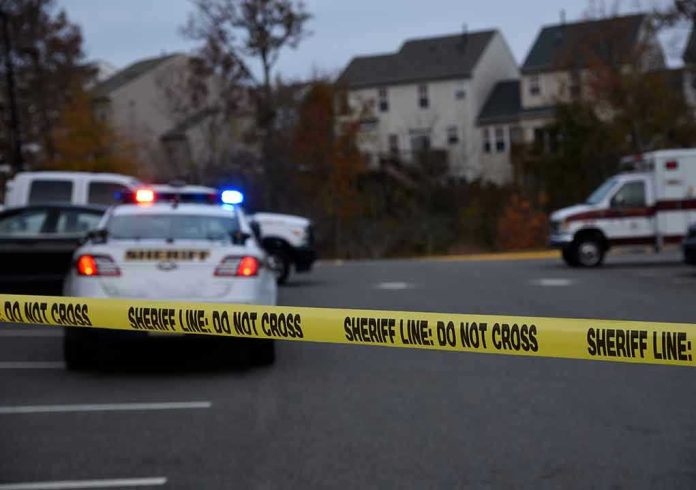
A quiet Iowa river town has been shattered after police say a 52-year-old man gunned down six of his own family members across three locations before killing himself, renewing hard questions about crime, mental health, and what “public safety” really means in Biden-era America.[1][4]
Story Snapshot
- Police say 52-year-old Ryan Willis McFarland killed six family members at three locations in Muscatine before dying by suicide during police contact.[1][2][4]
- Four victims were found inside a Park Avenue home, with two more discovered at separate addresses tied to the same domestic dispute.[1][2]
- Authorities describe the killings as a domestic incident with no continuing threat to the public, but key records and details remain sealed in an “active” investigation.[1][2]
- The case highlights a growing pattern of family massacres and how early police narratives quickly become accepted truth before primary records are released.[1]
What Police Say Happened In Muscatine
Muscatine Police Department officers responded to a home at 210 Park Avenue after reports of gunfire and found four people dead from gunshot wounds inside the residence.[1][2][4] Investigators quickly tied the scene to 52-year-old Ryan Willis McFarland, who they identified as the suspect in what they framed as a domestic dispute turned deadly.[1][2][4] Officers then discovered two additional male victims at separate addresses on Mill Street and Grandview Avenue, linking all three crime scenes under the same investigation.[1][2]
Police say McFarland fled the initial scene but was later located near a riverfront trail and pedestrian bridge, where he died by suicide during contact with responding officers.[1][2][4] Authorities stressed there was no ongoing threat to the community, emphasizing that the killings were confined to McFarland’s family and grew out of a domestic conflict.[1][2] Early reports from several outlets, including local television stations, all echoed the same core story: six victims dead, the suspected gunman also dead, and a community left stunned.[1][2][4]
Domestic Massacres And A Familiar Pattern
Investigators publicly stated that all six victims were believed to be family members of McFarland, placing the Muscatine murders squarely in the category of domestic mass killings rather than a random public shooting.[1][2][4] Research on similar cases shows that many of the worst mass murders in America occur inside families, far from public view, as seen in other well-known familicide tragedies where parents or children wiped out entire households. These events typically blend intimate conflict, isolation, and access to firearms in private settings, then explode into sudden, catastrophic violence.
Muscatine now joins a grim list of communities scarred by family massacres that were initially explained to the public entirely through quick police briefings and local television summaries.[1][2] In case after case, early language from officials—“domestic dispute,” “no ongoing threat,” “believed to be family members”—is repeated so often that it hardens into public truth before investigative records ever see daylight.[1][2] That pattern raises concerns for citizens who want both safety and transparency, because the most important questions about motive, prior warning signs, and institutional failures often surface later, if at all.[1]
Unanswered Questions And Limits On Public Transparency
So far, the public story of the Muscatine killings rests almost entirely on police statements relayed through television news rather than on primary documents like incident reports, autopsy findings, or detailed coroner rulings.[1][2][4] Reporters acknowledge that several key points remain provisional, including the exact family relationships among the dead and the full sequence of shootings across Park Avenue, Mill Street, and Grandview Avenue.[1][2] Even the spelling of McFarland’s surname and minor details like dates or phrasing about the death toll differ across outlets, reflecting hurried coverage.[1][3]
A mass shooting occurred in Muscatine, Iowa, leaving seven people dead, including the suspected gunman. Police believe the victims may have been members of the same family. pic.twitter.com/8FGzQgyvfa
— Dyonne (@kgpnet) June 2, 2026
Authorities have labeled the case an active, multi-agency investigation, which often means incident reports, call logs, and forensic files will not be released until the case is formally closed.[1][2] That withholding may be standard procedure, but it leaves ordinary citizens dependent on an official narrative they cannot independently check, even as the story ricochets across national media and social platforms.[1][2] For a country already skeptical of institutions and demanding accountability, especially on matters of crime and public safety, Muscatine’s tragedy underscores how quickly the public is asked to trust early government explanations without seeing the underlying evidence.[1]
Sources:
[1] Web – Iowa Gunman Kills 6 Family Members Before Shooting Himself: Police
[2] Web – Watch Family Massacre: Season 1 Free | Fandango at Home (Vudu)
[3] YouTube – New details emerge on strict, isolated life of family allegedly slain …
[4] Web – THE NEWTON FAMILY MURDERS – American Hauntings