A Marine Corps F/A-18D crash near Rimrock Lake sparked a wildfire and fresh questions, while officials say the cause remains under investigation.
Story Snapshot
- Marine Corps F/A-18D crashed near Rimrock Lake; a wildfire ignited after impact [10].
- Officials have not released a cause; standard practice is to investigate first [2].
- Similar Navy crash statements stress rescue and cooperation with local authorities [1][2].
- Past Hornet mishaps show varied outcomes, so early claims of a pattern can mislead [9].
What Happened Near Rimrock Lake
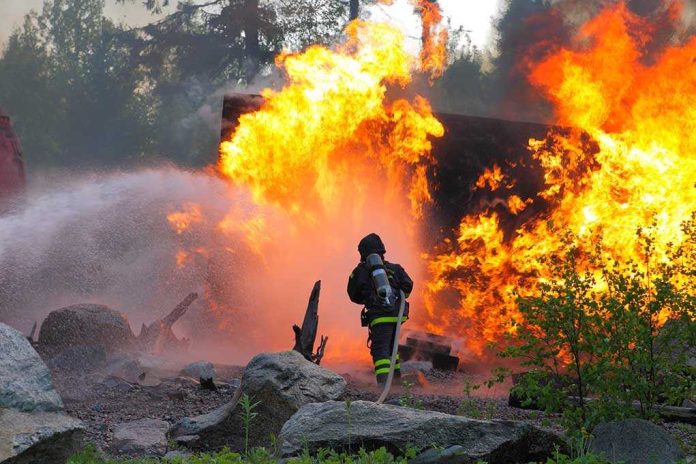
Local reports said a military aircraft crashed near Rimrock Lake in Washington and sparked a wildfire on Saturday. County officials and first responders worked the fire line as crews secured the crash area [10]. Early accounts tied the jet to the Marine Corps F/A-18D Hornet community, which often trains across the West. Authorities did not share a cause. That restraint is normal in the first hours after a crash, when safety teams gather facts and secure the site [10].
Witness posts spread quickly online and pointed to a Hornet from a known Marine squadron. Social media often moves faster than formal channels. But mishap boards do not use social posts to set findings. County updates focused on the fire and public safety, not on why the aircraft went down [10]. Families near the lake wanted answers fast. Investigators must still review flight data, maintenance logs, and pilot actions before they reach any conclusion.
Why Officials Avoid Early Causation Calls
Naval aviation has a clear pattern after a crash. Commands confirm the event, secure the site, and say the incident is under investigation. In a Death Valley Super Hornet crash, the United States Navy stated the crash time and location and said the case was under review, while working with park and local officials [1][2]. That careful wording protects the integrity of evidence. It also avoids blaming pilots, maintainers, or parts before facts are solid [2].
That process can frustrate the public, but it serves safety. A rushed claim can hide a root cause or smear a good aircrew. Clear steps follow every mishap: gather debris, log witness statements, check training and maintenance records, then test parts. Only then do leaders decide if any fleet-wide move is needed. Sometimes they ground a model. Many times they do not, because evidence points to a unique chain, not a pattern [2].
How This Fits Past Hornet Mishaps
Hornet and Super Hornet crashes have had different outcomes across decades. In one well-known F/A-18D case near San Diego, a dual engine failure ended in loss of life on the ground, which drove major reviews of routing and risk at the time [9]. In other events, pilots ejected safely and damage stayed remote from homes [3]. Those contrasts matter. They show that one crash does not prove a wider failure without data to back it up [3][9].
Military aviation is demanding. Training flights push airframes and crews to be ready for combat. Even with strict maintenance, things break. Human error still happens. Weather can turn fast. The right answer is to follow facts, fix what the facts show, and keep our forces strong. That focus beats hot takes that paint the entire fleet as broken or, on the other hand, dismiss every warning sign without review [2][3].
What Citizens Should Watch Next
Investigators will release a preliminary statement first, then a fuller report. Look for clear items: maintenance history, parts failure tests, flight profile, and any training or planning gaps. If they see risk to the broader fleet, leaders will set changes, from inspections to software updates. Past Navy notices have shown that commands will also share basic crash details and coordinate with local agencies when fires or debris affect communities [1][2][10].
This moment calls for steady judgment, not spin. We back our Marines, pilots, and maintainers. We also expect honest answers. Washington state residents who faced smoke and road closures deserve straight facts and timely fixes. The Trump administration has pledged to rebuild readiness and cut waste. That means funding the parts and training our crews need, and holding the line on safety without political games. Facts first, then firm action to keep our warriors lethal and safe.
Sources:
[1] Web – Marine Corps F/A-18 crashes in Washington state, sparks wildfire
[2] Web – F/A-18 Super Hornet Crash in Death Valley National Park
[3] Web – U.S. Navy Super Hornet Crashes in Death Valley National Park
[9] YouTube – Pilot aboard F/A-18 Hornet fighter jet that crashed on MCAS Miramar …
[10] Web – Accident McDonnell Douglas F/A-18D Hornet 164017, Monday 8 …