New York City Mayor Zohran Mamdani just dismantled one of the NYPD’s most fought-over police units, and he did it without blinking.
Story Snapshot
- Mayor Mamdani and Police Commissioner Jessica Tisch disbanded the NYPD’s Strategic Response Group on Monday, November 16, 2026.
- The unit, created in 2015 for counterterrorism, grew to handle protest and crowd control, drawing lawsuits for years.
- Its duties will spread to other units, including a brand-new Civilian Dialogue Unit.
- The move fulfills a campaign promise Mamdani made long before taking office.
A Campaign Promise Mamdani Actually Kept
Mamdani did not bury this decision in a press release nobody reads. He said it out loud, repeatedly, on national television. “I’m committed to disbanding the Strategic Response Group and decoupling our city’s response to protests versus threats of terrorism,” he told NPR’s Newsmakers in April 2026. On another show, he put it even more bluntly: disbanding the unit was “not an if for me. It’s a when.”
His reasoning stayed consistent the whole time. Mamdani argued that fighting terrorism and policing a protest sign-waving crowd are not the same job, and never should have been treated like one. He called the combination “a modern conflation” that the city no longer needed. Supporters say that distinction matters, because a unit trained for bombs and mass shooters brings a very different mindset to a sidewalk rally.
Why the Unit Became a Lightning Rod
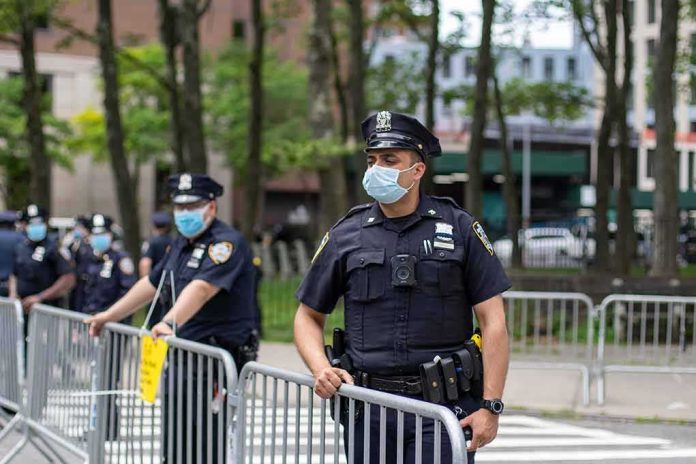
The Strategic Response Group started small. It launched in 2015 as a roughly 350-officer counterterrorism team. Within a few years it had grown to nearly 800 officers and picked up a much broader job: general crime reduction and what the department called “crowd and protest control,” gear included ballistic helmets, assault rifles, and riot shields.
That expansion made the unit a magnet for complaints. It racked up a disproportionate share of Civilian Complaint Review Board cases and faced multiple lawsuits tied to its handling of demonstrations, including the 2020 protests that followed George Floyd’s death. Critics said a unit built for terrorism and one built for crowd control require opposite instincts, and smashing them together produced neither good counterterrorism work nor good protest policing.
What Takes the Unit’s Place
Mamdani is not simply erasing the job and walking away. The counterterrorism and crowd-control duties are being split up and handed to other existing units inside the department, alongside a newly created Civilian Dialogue Unit meant to communicate directly with protest organizers before tensions boil over. The administration frames this as keeping the city safe while pulling militarized officers out of first-amendment settings.
The New York City Comptroller’s office had been pushing this exact idea for years, recommending the city stop sending officers equipped for mass-casualty events to standard marches and parades. That recommendation sat inside a larger public-safety report aimed at rebuilding trust between the department and the communities it polices.
UPDATE: NYC Announces Replacement Structure as NYPD Strategic Response Group Is Disbanded
Restructuring begins in the new year. Protest response will be reorganized; counterterrorism duties remain within the NYPD.https://t.co/8NauKfntf3 pic.twitter.com/ySRW9b6zci
— Tachlis Daily (@TachlisDaily) November 17, 2026
The Reaction Splits Exactly Where You’d Expect
Reaction broke down fast along predictable lines. A former NYPD detective warned the move would create a “major chilling effect” on officers trying to keep order during large, volatile crowds. Florida Senator Ashley Moody went further, publicly inviting displaced Strategic Response Group officers to relocate and join law enforcement in her state instead.
That reaction is not hard to understand. New York is not exactly short on large protests, and removing a dedicated rapid-response unit right before winter demonstration season is a real gamble, regardless of how the paperwork gets reorganized. A mayor can rename a unit and redistribute officers on a chart, but crowds in the street do not care which acronym shows up when things turn violent.
Mamdani’s defenders counter that the old setup blurred lines that should never have been blurred, and that the lawsuits and complaints piling up against the unit for a decade prove the old model was already failing. Both sides agree on one thing: this was not a quiet bureaucratic tweak. It was a mayor following through, in public, on exactly what he told voters he would do.
Sources:
washingtontimes.com, nyc.gov, news.bloomberglaw.com, en.wikipedia.org, nytimes.com